


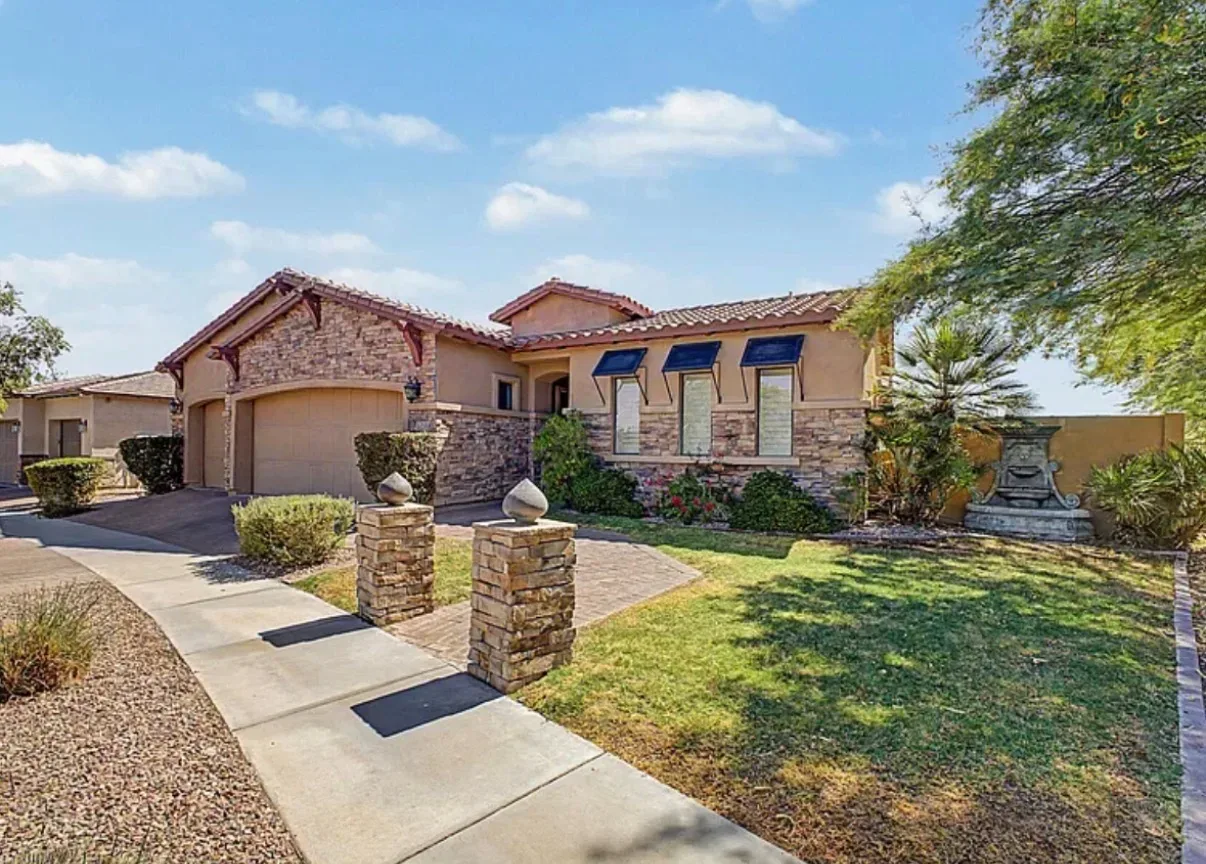
Some architecture is a fashion, and some is a fit. The Tuscan villa, with its clay tile roofs, warm stucco, natural stone, and shaded courtyards, turns out to be deeply suited to the Arizona desert, even though it was born in the hill towns of central Italy. At 3238 E Mountain Village Cir, that tradition is on full display.
Built for heat before air conditioning existed
The genius of Tuscan design is that it solved a hot, dry climate centuries before modern cooling. Clay tile roofs reflect and shed solar heat. Thick stucco and stone walls absorb warmth during the day and release it slowly at night. Courtyards create shaded outdoor rooms where the house breathes. In the Valley, these are not just pretty details. They are practical answers to the same problem Italian builders faced.
Materials that age well
This home leans into materials that only get better with time: travertine, slate, and wood flooring; stone veneer across the facade; granite counters in the kitchen. These are honest materials that wear, patina, and hold value, which is part of why the style keeps its appeal in resale.
Details that feel intentional
Walk through and the language repeats: arched openings that frame the rooms, tray ceilings that add height, custom built-ins that give the house a bespoke feel. The courtyard entrance with its stone fountain sets the tone before you even step inside, and the backyard carries it through with a fireplace, an outdoor kitchen, and a pergola.
An Italian villa, made for mountain views
Set at the foot of South Mountain, this villa pairs the warmth of Tuscan materials with a backdrop of desert peaks. It is a style that was made for homes that face open sky. If the look speaks to you, the best way to feel it is in person. Come walk the villa and judge the details for yourself.